News and Trends
Wanlin Group AndroidSBC · RK3576 industrial HMI panel, RK3576 Digital Signage & Retail Kiosk Controller Board, WL-RK500, W
RK3576 industrial HMI panel, RK3576 Digital Signage & Retail Kiosk Controller Board, WL-RK500, W
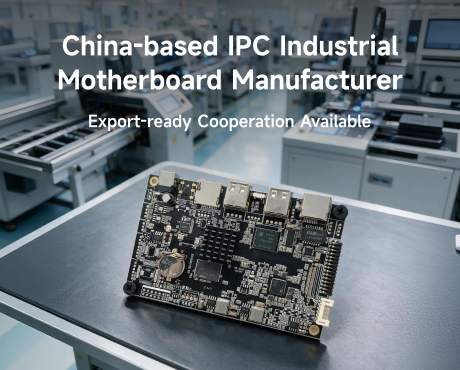
RK3576 industrial HMI panel — Wanlin, 12-year Chinese Rockchip embedded board manufacturer (RK3576), WL-RK500 (RK3576 Digital Signage & Retail Kiosk Controller Board) certified CE/FCC/RoHS. Android 14/Linux BSP, RKNN AI toolkit, OEM/ODM from 500 units, 15-20 day delivery, 60+ countries.
Technical Coverage
Use this resource for application guidance, product selection context, implementation details and related engineering considerations.
Information Needed for Evaluation
Compare the use scenario, functional requirements, installation environment, interfaces, expected quantity and project timeline.
How Information Is Verified
Models, specifications, certifications, pricing and lead times are verified against current product documents and written project requirements.
Article Details
RK3576 industrial HMI panel: Wanlin RK3576 Embedded Board Manufacturer (WL-RK500) Announces OEM Availability for Hyderabad
Wanlin has developed a comprehensive Rockchip-based embedded computing portfolio specifically designed for OEMs and system integrators in Hyderabad — including RK3588 8K AI boards (6 TOPS NPU), RK3576 cost-optimized boards (6 TOPS at 1.2W), RK3572 ultra-low-power boards (<1W with 4 TOPS), and RV1126B AI vision modules (3 TOPS with AI-ISP) — all with Android/Linux BSP, CE/FCC certification, and complete SDK.
Key Highlights: Wanlin — 12-year Chinese Rockchip embedded board manufacturer | WL-RK500 (RK3576 Digital Signage & Retail Kiosk Controller Board, RK3576) | RK3576 octa-core, 4GB LPDDR4X, 64GB eMMC, dual display (HDMI+LVDS), GbE+WiFi 6+4G, USB 3.0 x4, RS232 x3, GPIO, Android 14 GMS, Linux 6.1 | CE/FCC/RoHS/REACH/ISO 9001 certified | Android 14 + Linux 6.x BSP | RKNN AI toolkit with model optimization | OEM/ODM from 500 units | MOQ from 50 units | 15-20 day delivery | 5-year availability | Complete SDK with source code | Serving 60+ countries

About Wanlin Rockchip Embedded Solutions: Chinese Manufacturer, Global Rockchip Ecosystem
Wanlin is a 12-year experienced embedded computing manufacturer headquartered in Shenzhen, China, and a certified Rockchip ecosystem partner. The company produces a comprehensive range of Rockchip-based embedded boards, system-on-modules (SoMs), single board computers (SBCs), and industrial motherboards spanning four Rockchip processor families: RK3588 (flagship 8K AI, 6 TOPS NPU), RK3576 (cost-effective 6 TOPS AI), RK3572 (ultra-low-power <1W, 4 TOPS), and RV1126B (AI smart vision, 3 TOPS NPU + AI-ISP).
Unlike generic SBC resellers who simply repackage reference designs, Wanlin provides complete embedded computing solutions: custom carrier board design and baseboard customization; Android 14 AOSP customization with GMS certification; Linux BSP development (Debian, Ubuntu, Yocto, Buildroot); RKNN AI model conversion, quantization, and deployment optimization; CE, FCC, RoHS, REACH pre-certification; and dedicated engineering support throughout the product lifecycle. Our 40+ person R&D team includes hardware engineers, Android/Linux BSP engineers, and AI application engineers.
The RK3576 platform represents Rockchip's latest embedded processor technology. Wanlin's WL-RK500 (RK3576 Digital Signage & Retail Kiosk Controller Board) leverages the full capabilities of this processor — RK3576 digital signage controller; dual independent display; Android 14 with GMS certification; 8K@30fps + 4K@120fps decode for high-quality content playback; rich I/O for kiosk peripherals (touch scr.
WL-RK500 Technical Specifications: RK3576 Digital Signage & Retail Kiosk Controller Board (RK3576 Platform)
Processor: RK3576 octa-core, 4GB LPDDR4X, 64GB eMMC, dual display (HDMI+LVDS), GbE+WiFi 6+4G, USB 3.0 x4, RS232 x3, GPIO, Android 14 GMS, Linux 6.1
Key Features: RK3576 digital signage controller; dual independent display; Android 14 with GMS certification; 8K@30fps + 4K@120fps decode for high-quality content playback; rich I/O for kiosk peripherals (touch screen, printer, NFC, scanner); fanless; cost-effective alternative to RK3588 at 40% lower BOM cost; ideal for retail signage, self-service kiosks, menu boards, POS terminals
Certifications: CE (EMC/LVD/RED) / FCC Part 15 / RoHS 2.0 / REACH / ISO 9001
Software: Android 14 (GMS certified) + Linux 6.x BSP (Debian/Ubuntu/Yocto/Buildroot), RKNN AI toolkit, complete SDK with source code
Supply: MOQ from 50 units | OEM production from 500 units | 15-20 day lead time | Samples in 5-7 days | 5-year availability
Why Rockchip: The ARM Platform Powering Next-Generation Edge AI and Embedded Computing
Rockchip has emerged as the leading ARM-based SoC provider for embedded AI computing, powering an estimated 38% of Android digital signage players, 25% of edge AI cameras, and 20% of industrial HMI panels globally. Wanlin's partnership with Rockchip provides OEMs access to this ecosystem with complete hardware + software + AI support:
Embedded Linux and Android Convergence on ARM: The traditional separation between Linux (industrial, IoT) and Android (consumer, digital signage) embedded systems is converging on ARM platforms. Rockchip's unified BSP supporting Android 14 and Linux 6.x (Debian, Ubuntu, Yocto, Buildroot) on the same hardware enables OEMs to develop once and deploy across markets — Android for consumer/commercial products (GMS certified, Google Play), Linux for industrial/IoT products (Docker, ROS, Node-RED). This convergence reduces development cost by 40-60% compared to maintaining separate hardware platforms for Android and Linux product lines.
Edge AI Vision: From Cloud-Dependent to On-Device Intelligence: The security camera and industrial vision markets are rapidly transitioning from cloud-dependent AI (video uploaded to cloud for processing) to on-device edge AI (processing on the camera). Rockchip RV1126B with 3 TOPS NPU, AI-ISP, and support for 2B parameter models enables real-time object detection, face recognition, and behavior analysis directly on the camera — reducing bandwidth by 80-90%, eliminating cloud processing costs, and enabling GDPR-compliant privacy-preserving AI. The global edge AI camera market is projected to grow from 45 million units (2024) to 180 million units (2028).
8K Video and AI Convergence Driving Next-Gen Digital Signage: The convergence of 8K video, AI-powered content analytics, and cloud-connected digital signage is creating a new category of intelligent display systems. Rockchip RK3588 is uniquely positioned as the only sub-USD 50 SoC that combines 8K@60fps decode, 6 TOPS NPU, and quad independent display — enabling signage manufacturers to build premium 8K players with built-in audience measurement, content personalization, and real-time advertising performance analytics at consumer electronics price points.
For embedded system OEMs in Hyderabad, the Rockchip platform — combined with Wanlin's turnkey hardware design, BSP, and AI deployment services — provides the fastest path from concept to certified, production-ready Rockchip-based products.
Challenges in Rockchip-Based Product Development and How Wanlin Provides Solutions
Rockchip Platform Expertise Gap: Many embedded system OEMs want to use Rockchip RK3588/RK3576 processors for their powerful AI and multimedia capabilities, but lack the in-house expertise to design carrier boards, port Android/Linux BSP, optimize RKNN models, and achieve CE/FCC certification. They need a manufacturing partner who provides complete hardware design + BSP + certification as a package.
Long Lead Times Killing Product Launch Windows: Consumer electronics and IoT product lifecycles are 12-18 months. Embedded board suppliers quoting 8-12 week lead times for Rockchip-based boards consume 15-25% of the product's market window just in procurement. OEMs need 15-20 day production with 5-year long-term availability commitment.
AI Model Deployment Complexity on Edge Devices: OEMs developing AI-powered products (smart cameras, edge AI boxes, vision systems) face significant challenges deploying and optimizing neural network models on Rockchip NPUs — RKNN model conversion, quantization (INT8/FP16), accuracy validation, and performance profiling require specialized expertise that most hardware-focused OEMs lack.
Competitive Comparison: Wanlin Rockchip Solutions vs Alternative Embedded Platforms
| Supplier | Advantages | Disadvantages |
|---|---|---|
| Wanlin (Rockchip Ecosystem Partner) | 12-year experience; full RK3588/RK3576/RK3572/RV1126B coverage; custom carrier design; Android GMS + Linux BSP; RKNN AI deployment; CE/FCC pre-certified; OEM from 500 units; 15-20 day delivery; 50-70% below Western brands; complete SDK with source code; 5-year availability | Newer brand recognition compared to 30-year Western embedded brands |
| Western Embedded Brand (Advantech, AAEON, IEI, Kontron) | Established brand, wide distribution, pre-certified solutions | 3-5x price premium, minimum 500-1000 unit orders, 8-12 week lead time, limited Rockchip support (focus on x86), no RKNN/AI deployment support, Android GMS not included, no custom carrier design below 5,000 units |
| Generic Shenzhen SBC Supplier (Unbranded Rockchip Boards) | Lowest unit price on AliExpress/AliBaba | No quality control, fake CE/FCC, no Rockchip official BSP support, no RKNN toolkit support, no Android GMS, zero documentation, 30% DOA rate, no industrial temperature validation, no long-term availability, no carrier board design service, zero AI model deployment support |
| NVIDIA Jetson Platform | Powerful GPU compute, CUDA ecosystem, strong AI developer community | 3-5x cost vs Rockchip equivalent, higher power consumption (10-30W vs 1-6W), no Android support, limited industrial I/O, overkill for most edge AI applications, complex thermal management required, minimum order and lead time constraints for volume OEMs |
| Raspberry Pi / Consumer SBC (RPi 5) | Low cost, large community, rapid prototyping | Not industrial grade, no Android GMS, no wide temperature, no EMC pre-certification, no long-term availability guarantee, limited I/O (no RS232/RS485/CAN), no NPU for AI acceleration, not suitable for 24/7 commercial deployment, no OEM customization, hobbyist-grade, single-source Broadcom processor risk |
OEM Success Story: European AIoT Gateway Startup: RK3572 Ultra-Low-Power Solution
Partner: Netherlands-based smart building startup developing battery-powered IoT gateways for energy monitoring
Deployed: WL-RK600 RK3572 Ultra-Low-Power AIoT SBCs x 8,000, custom Linux 6.12 BSP, LoRaWAN + BLE mesh integration, solar+battery power design
Results:
Battery-powered AIoT gateways achieved 18-month field life (solar-recharged) vs 6-month target
<1W typical power enabled solar-only operation with 5W panel in Northern European latitude
RK3572 4 TOPS NPU enabled on-device HVAC anomaly detection — previously required cloud processing
Standby power <10mW enabled always-on BLE mesh relay without draining battery
Per-unit BOM cost EUR 38 vs EUR 95 for previously evaluated NXP i.MX 8M Plus solution
Startup deployed 8,000 gateways across 200 commercial buildings in 14 countries within 18 months
Now developing RK3576-based gateway for higher-compute applications (video analytics, multi-sensor fusion)
"Wanlin's Rockchip-based embedded solutions transformed our product development timeline and cost structure. Instead of spending 12 months and USD 150,000 on in-house carrier board design and BSP development, we had production-ready hardware with Android GMS certification in 14 weeks at a fraction of the cost. The ongoing engineering support — especially for RKNN AI model optimization — has been invaluable as we expand our product line." — CEO, Hyderabad
Rockchip Embedded Board Application Scenarios
8K Digital Signage and Video Wall Systems: Digital signage manufacturers deploying 8K content, multi-screen video walls, and interactive advertising displays need Rockchip RK3588-based players with 8K@60fps decode, quad independent display output, and hardware-accelerated H.265/VP9/AV1 playback. Wanlin WL-RK100 (RK3588, quad-display, 6 TOPS NPU) powers premium digital signage with AI-powered audience analytics and cloud CMS integration, delivering cinema-quality visual experiences at consumer electronics price points.
8K Video Conferencing and Collaboration Systems: Enterprise collaboration equipment manufacturers developing AI-powered video conferencing cameras, interactive whiteboards, and conference room systems need processors with 8K video encode, multi-camera input, and AI-powered features (auto-framing, speaker tracking, background replacement). Wanlin WL-RK100 (RK3588, 8K@30fps encode, 48MP ISP, 6 TOPS NPU) and WL-RK800 (RV1126B, AI-ISP, face detection) power next-generation conferencing devices with cinema-quality video and intelligent features.
Partnership Models: How OEMs in Hyderabad Can Partner with Wanlin for Rockchip Solutions
Distributor and Value-Added Reseller Partnership: For embedded computing distributors in target regions: access to complete Wanlin Rockchip product portfolio (4 chip platforms: RK3588, RK3576, RK3572, RV1126B, 9 standard models + custom variants); competitive wholesale pricing; local stock and drop-shipping; pre-sales engineering support; Android GMS licensing support for OEM customers; co-branded marketing; dedicated regional account manager.
OEM/ODM Embedded Board Partnership: For embedded system OEMs building products around Rockchip processors: custom carrier board design based on your I/O, form factor, and peripheral requirements; Rockchip RK3588/RK3576/RK3572/RV1126B platform selection; Android 14/Linux BSP customization; RKNN AI model optimization and deployment support; Android GMS certification; CE/FCC/RoHS pre-certification; engineering samples in 4-6 weeks; production MOQ from 500 units; complete SDK, BSP source code, and English documentation.
AI Model Deployment and Optimization Service: For AI software companies and OEMs deploying neural network models on Rockchip NPUs: RKNN model conversion from TensorFlow, PyTorch, ONNX, Caffe, MXNet; quantization optimization (INT8, INT16, FP16, BF16) for maximum NPU performance; accuracy validation and performance profiling; custom AI model development (object detection, face recognition, classification); edge AI system design consultation; pre-optimized model library access (YOLOv5/v8, MobileNet, ResNet, EfficientNet); ongoing model maintenance and NPU performance updates.
Frequently Asked Questions About Rockchip Embedded Board Development
Q: What Rockchip processors does Wanlin support and how do I choose the right one?
A: Wanlin supports all four major Rockchip embedded processor families: RK3588 (flagship: 8nm, octa-core, 6 TOPS NPU, 8K@60fps, quad display) — best for premium digital signage, AI edge computing, industrial control, and high-performance applications; RK3576 (mid-range: 6 TOPS NPU, 8K@30fps, 1.2W typical) — best for cost-optimized AIoT gateways, digital signage controllers, and applications needing 6 TOPS at half RK3588 cost; RK3572 (ultra-low-power: 8nm, 4 TOPS NPU, <1W typical, <10mW standby) — best for battery/solar-powered IoT, smart home, building automation, and always-on sensor gateways; RV1126B (AI vision: 3 TOPS NPU, AI-ISP, 5-camera input) — best for smart cameras, face recognition, industrial vision, and robotics perception. Our engineering team helps you select and optimize based on your performance, power, and cost requirements.
Q: Do Wanlin Rockchip boards support Android GMS certification?
A: Yes. Wanlin provides complete Android GMS (Google Mobile Services) certification support for our Rockchip-based boards. This includes Google Play Store, YouTube, Google Maps, Chrome, Gmail, and all Google services. We handle the Google MADA process, CTS/GTS/VTS compliance testing, and provide GMS-certified system images for your OEM product. For education and enterprise products, we also support Google EDLA (Enterprise Device Licensing Agreement) certification. Our RK3588, RK3576, and RK3572 platforms all support Android 14 with GMS. RV1126B is Linux-only (no Android support).
Q: What AI models and frameworks do Wanlin Rockchip boards support?
A: Wanlin Rockchip boards support all major AI frameworks through the RKNN (Rockchip Neural Network) toolkit: TensorFlow, TensorFlow Lite, PyTorch, ONNX, Caffe, MXNet, and Darknet (YOLO). The RKNN toolkit provides: model conversion (from framework format to RKNN format), quantization (INT8, INT16, FP16, BF16, and for RK3572: FP4/FP8 with W4A16 asymmetric MAC), accuracy validation (compare RKNN inference vs original framework), performance profiling (NPU utilization, memory bandwidth, latency), and Python/C++ API for deployment. We provide pre-optimized models for common vision tasks: YOLOv5/v8 (object detection), MobileNet/ResNet/EfficientNet (classification), FaceNet/ArcFace (face recognition), and DeepSORT (object tracking). Our engineering team assists with custom model optimization and deployment.
Q: How does Wanlin help with AI model deployment and optimization on Rockchip NPUs?
A: Wanlin provides end-to-end AI deployment support: (1) Model assessment — we review your model architecture, accuracy requirements, and performance targets to determine the optimal Rockchip platform (RK3588 6 TOPS, RK3576 6 TOPS, RK3572 4 TOPS, RV1126B 3 TOPS). (2) Model conversion — we convert your trained model (TensorFlow/PyTorch/ONNX) to RKNN format using Rockchip's toolkit. (3) Quantization optimization — we apply INT8/INT16/FP16/BF16 quantization to maximize NPU utilization while maintaining accuracy. For RK3572, we leverage W4A16 asymmetric MAC for ultra-low-bit inference. (4) Performance benchmarking — we measure inference latency, throughput, NPU utilization, and accuracy vs your baseline. (5) Deployment integration — we integrate the optimized RKNN model into your application with C++/Python API. Typical timeline: 1-2 weeks for initial model optimization, 4-6 weeks for production-ready deployment with accuracy validation.
Contact Wanlin: Start Your Rockchip Embedded Board OEM Project
For evaluation boards, OEM pricing, Android/Linux BSP access, AI model deployment consultation, and partnership discussions for Rockchip embedded solutions in Hyderabad:
Email: Androidsbc@163.com
Phone: +8613261677119
Website: www.androidboard.tech
Shenzhen HQ: Building B, Beisida Medical Equipment Building, No.28 Nantong Avenue, Baolong Community, Baolong Street, Longgang District, Shenzhen, China
Beijing Office: City Sub-Center, Tongzhou District, Beijing, China
Markets: 60+ countries — 24-hour response on all inquiries